
Why Erie Basements Back Up When It Rains: Combined Sewers, Snowmelt & Your Sewer Lateral
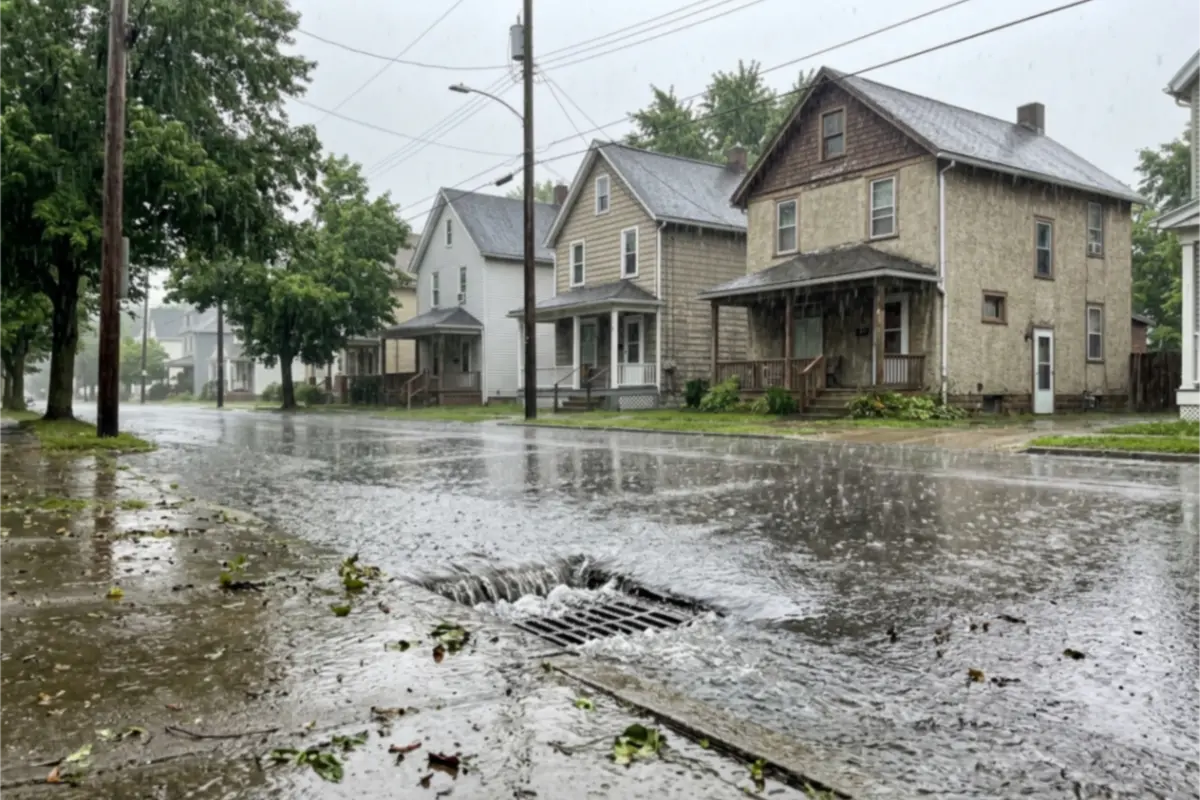
Much of the City of Erie still runs on a combined sewer that carries sewage and stormwater in the same pipes. When a storm or a fast thaw fills it, water looks for the lowest opening, and in older Erie homes that is the basement floor drain.
- Fast local help: call now
- Price confirmed before work starts
- Free call, no obligation
- Local Erie County drain pros
Basement backing up in a storm?
- Stop running water and flushing toilets.
- Keep kids and pets away from any sewage.
- Call (888) 703-1520 and describe what you see.
Why does my basement back up when it rains in Erie?
Because rainwater and snowmelt end up in the same pipes as your sewage. In the City of Erie, many neighborhoods are served by a combined sewer that carries both. When a heavy storm or a fast thaw fills those pipes, and your own sewer lateral is cracked, root-filled or partly blocked, the extra water has nowhere to go but up through the lowest opening in your house, usually the basement floor drain. If it’s happening now, stop using water and call (888) 703-1520.
How Erie’s Combined Sewer Works
Combined sewers are a design that dates back to the late 1800s, and Erie is one of many older cities that still relies on them. In dry weather the system carries everything to the City’s wastewater treatment plant. In heavy rain or snowmelt, flow can exceed capacity.
Dry weather
Sewage and a little groundwater flow from your lateral into the City main and on to the treatment plant. Floor drains stay dry.
Heavy rain or a fast thaw
Stormwater pours into the same pipes. As they fill, the City’s overflow structures release diluted sewage and stormwater to Lake Erie to keep it out of streets and basements. The City monitors four permitted overflow points and posts possible overflow events on its public map.
When your lateral is the weak link
If your sewer lateral has cracked clay joints, roots or a sag, groundwater gets in and the line can’t drain fast enough. Even a modest storm can then push water back up into your basement.
Erie averages about 100 inches of snow and about 43 inches of total precipitation a year, so the sewer system faces both storm surges and spring thaw. The City has also identified its dense urban core, especially southeast Erie, as prone to urban flooding and storm sewer overloads.
Is It Your Sewer Line or the System?
Where and when the water shows up tells you a lot. A drain pro can confirm it with a cleaning and a camera inspection.
| What you see | Most likely cause | What to do |
|---|---|---|
| Floor drain backs up only during heavy rain or snowmelt | Groundwater entering a cracked lateral, or a surcharged public sewer | Have the line cleaned and camera inspected; ask about a backwater valve |
| Backs up in storms and also when the washer drains | Your lateral is partly blocked by roots, scale or grease | Main line cleaning, then a camera inspection |
| Several homes on your street back up in the same storm | The public sewer is overloaded | Report it to your municipality with photos, and have your own line checked |
| Backups in dry weather too | Blockage in your own line | Call for main line cleaning now |
| Water comes through the walls or floor, not the drain | Groundwater or surface water | This is a waterproofing or sump pump issue, not a sewer clog |
What To Do When Your Basement Backs Up in a Storm
- Stop using all water in the house: no flushing, showers, dishwasher or laundry.
- Keep children and pets away, and don’t touch sewage without gloves and boots.
- Stay out of water near outlets, appliances or the furnace.
- Photograph the water and damage before cleanup for your insurance claim.
- Call a drain pro at (888) 703-1520 to clear the line and check whether the blockage is yours or the City’s.
- In the City of Erie, report a suspected main problem to Sewer Collections at (814) 870-1350 on weekdays, 7:00 AM to 3:30 PM. After hours, the City asks residents to call a plumber first.
See emergency drain cleaning in Erie for what happens when you call at night or on a weekend.
How To Protect Your Basement Before the Next Storm
Keep your lateral clear
Roots and grease shrink the pipe so storm flow can’t get through. Main line cleaning or hydro jetting restores capacity before storm season.
Find the cracks
A sewer camera inspection shows cracked clay joints, offset sections and roots that let groundwater in. Fixing them reduces how much extra water your line carries in a storm.
Install a backwater valve
A backwater valve closes when sewage flows the wrong way, helping keep it out of your basement. It needs correct sizing and installation, usually a permit, and regular checks, and it is not a guarantee.
Take stormwater out of the sewer
Point downspouts away from the foundation and make sure your sump pump discharges to the yard, not into a floor drain or laundry sink. Clean water in the sanitary sewer adds to everyone’s backups.
Check your insurance
Standard homeowners policies often exclude sewer backup unless you add sewer or water backup coverage. Check before storm season, not after.
Outside the City: Millcreek, Harborcreek and Nearby Townships
Each township and borough runs its own sewer system with its own rules. Even where storm and sanitary sewers are separate, heavy rain still finds its way into sanitary lines through cracked laterals and improper connections. On October 23 and 24, 2025, storms sent sewage into basements in Erie and Millcreek, including homes on Indiana Drive and in the South Shore Drive area, one of which had a backflow preventer. If several homes on your street flood at once, report it to your municipality.
Storm Backup FAQ: Erie, PA
Does the City of Erie have a combined sewer system?
Yes. Parts of the City of Erie still use combined sewers, where sanitary sewage and stormwater share the same pipes. The City monitors four permitted overflow points and posts possible overflow events on a public map.
Why does my floor drain back up only when it rains?
Rain or snowmelt is getting into your line, the public sewer is surcharged, or both. A cracked or root-damaged lateral lets groundwater in, and a partly blocked line can’t carry the extra flow, so it rises through the lowest drain.
Will a backwater valve stop sewage from coming into my basement?
It helps keep sewage from flowing back into the house through the sewer line, but it won’t stop groundwater or surface water. It must be sized and installed correctly, usually needs a permit, and has to be checked regularly.
Who pays if the City’s sewer caused my backup?
In the City of Erie, the homeowner owns the sewer lateral all the way to the City main. If a plumber finds the blockage is in the City’s system and the City confirms it, the homeowner may be reimbursed for the service call.
Is it legal to connect my sump pump or downspouts to the sewer?
In most Pennsylvania municipalities, stormwater connections to the sanitary sewer are not allowed, because they add clean water that overloads the system and causes backups. Check your municipality’s rules and route sump and downspout water to the yard or a storm drain.
Areas We Cover
Drain help is available across the City of Erie (ZIP codes 16501–16511) and nearby: Millcreek, Harborcreek, Fairview, Lawrence Park and Wesleyville. For cost factors, causes and who pays for sewer backups, see our guide to drain cleaning in Erie, PA.
Main Line Backing Up? Do This Right Now
- Stop using all water: no flushing, showers, dishwasher or laundry.
- Keep kids and pets away from sewage, and don’t touch it without gloves.
- Don’t pour chemical drain cleaner into a backed-up line.
- If water is near outlets, appliances or the furnace, stay out and call for help.
- Take photos for insurance, then call (888) 703-1520.
✓ Free call · ✓ Price before work · ✓ Fast local help
Last updated October 2026.
Sources
- City of Erie: Combined Sewer Overflow public notification
- EPA: Combined sewer overflows in Pennsylvania’s Great Lakes basin
- City of Erie: Mayor’s testimony on urban flooding and stormwater
- City of Erie Sewer Collections
- Penn State Extension: What are combined sewer overflows?
- National Weather Service: Erie snowfall climatology
- GLISA: Erie International Airport climate summary
- Erie News Now: Sewage and stormwater on Indiana Drive
- South Shore Drive sewage backup report
Drain Cleaning Prime is a free referral service that connects homeowners with independent local drain and sewer contractors. We don’t perform the work ourselves. Contractors are independent businesses, so confirm licensing, insurance and the price with your technician before any work begins.